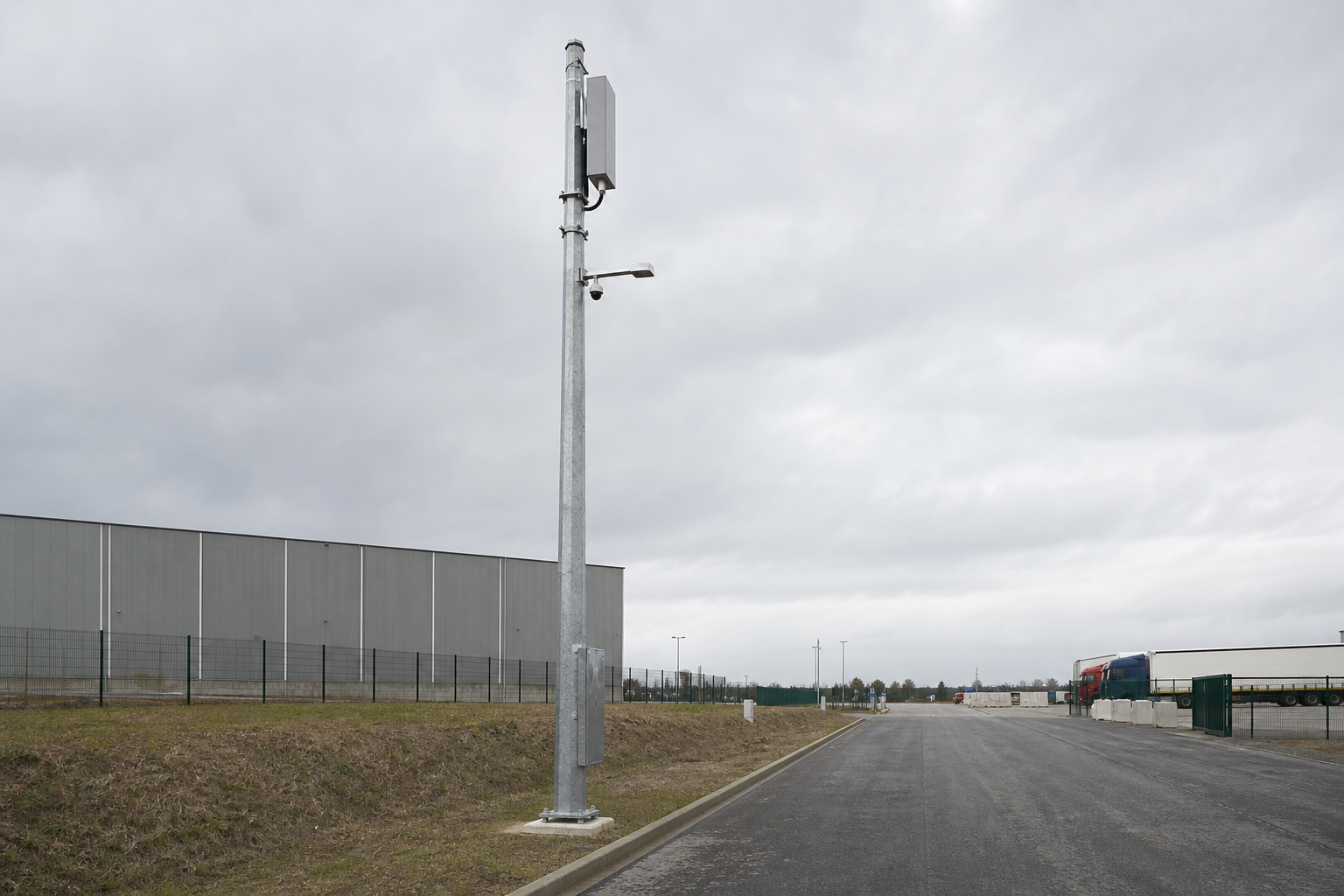
Infrastructure RFQ guide
Communication Poles: Antenna, CCTV and Lighting RFQ Inputs
A communication pole quotation is stronger when the equipment schedule travels with the pole. Send the known antenna, camera, radio, lighting, cabinet, cable-route and access inputs with the location and pole direction—not only a visual reference.
This buyer and engineering-input guide does not establish structural capacity, radio coverage, electrical design, lighting design, foundation design, installation method, safety controls or authority approval.

The short answer: quote the equipment interfaces with the pole
A communication pole is an infrastructure interface, not only a shaft and a base. The RFQ should identify what attaches to it, where the attachments sit, which party supplies each item, how cables or conduits reach the equipment and how installers and maintenance teams will access it.
The right first document is an equipment schedule tied to the latest site plan. It can include open decisions. Mark unknown antenna models, camera direction, cabinet location or lighting selection visibly rather than treating a concept image as a final instruction.
Location and layout
Site plan, quantities, pole locations, nearby roadway or facility condition, clearance constraints and the latest drawing reference.
Equipment schedule
Known antenna, camera, radio, cabinet and lighting models; mounting elevation/direction; mass, projected area, cable/connector details and supplied-by party.
Access and release
Cable route, access panel direction, service access, finish, installation constraints, authority route, supplied scope and controlled open items.
RFQ inputs for a communication pole
The list below gives suppliers and project teams a shared starting point. It keeps commercial coordination visible while the designated parties complete the required engineering and authority review.
| Application and location | Industrial site, logistics yard, campus, roadway, parking area, utility corridor or municipal location; provide the layout, quantity, pole schedule, adjacent equipment and applicable project documents. |
|---|---|
| Pole direction | Target height or elevation direction, shaft/profile preference, top arrangement, finish direction, base or other known installation interface and required supplied accessories. |
| Antenna and radio equipment | Known model/data, quantity, mounting interface, elevation, orientation, mass, projected area, connectors, cable route and whether an allowance for future equipment is requested. |
| CCTV and lighting | Camera model or envelope, viewing direction, mounting elevation, luminaire/bracket status, cable and power/control information available to the project, and supplied-by party. |
| Cabinets, access and maintenance | Cabinet or enclosure location/weight if applicable, handhole/access-door direction, service vehicle or lift access, security restrictions and maintenance constraints. |
| Scope and review | Included equipment, exclusions, finish/sample route, packing/delivery assumptions, document revision, open items, authority requirements and the route to production release. |
Build an equipment schedule before choosing the pole
A useful schedule gives each attachment its own row. For every antenna, camera, radio, luminaire or cabinet, record the model or physical envelope, mounting direction, elevation, weight or other manufacturer information available, cable/connector route and who supplies it. It is more useful than an unannotated rendering because it exposes the interfaces that can change the pole configuration.
If the equipment is still under selection, use a named placeholder and state what is not yet confirmed. That preserves a realistic concept-quotation path while preventing an unverified assumption from becoming a fabrication instruction.
Separate pole supply from project responsibilities
A supplier can quote the proposed pole and stated accessories around the agreed input package. The project team still needs to confirm the applicable structural, electrical, communications, lighting, civil, installation, maintenance, safety and authority requirements. Keep that division visible in the RFQ, drawing review and production-release record.
For roadway or municipal locations, the layout must also be reviewed against the responsible authority's current requirements. The FHWA and Department of Energy resources below provide general public infrastructure context; they are not a design approval or a substitute for a jurisdiction's process.
Pole supply
Proposed shaft, interfaces and accessories within the stated scope, based on the information supplied for quotation and review.
Project design
Responsible parties confirm structural, electrical, communications, lighting, civil, installation and maintenance requirements.
Authority coordination
Responsible parties confirm permits, clearances, traffic control, safety, location and any communications or security requirements.
A practical four-stage RFQ sequence
Use the sequence to keep early feasibility work separate from a final production release.
| 1. Site and equipment input | Share layout, locations, quantities, pole direction, equipment schedule, cable/access information, finish direction and known constraints. Mark unknowns. |
|---|---|
| 2. Proposed configuration | Review the proposed pole arrangement, attachment interfaces, access direction, supplied scope, open-items list and document revision. |
| 3. Designated project review | Responsible project parties complete the applicable engineering, equipment, civil, installation, safety and authority review, then resolve or accept open items. |
| 4. Controlled release | Release only the agreed revision with the confirmed configuration, equipment interfaces, supplied scope and required project approvals. |
Common communication-pole RFQ gaps
These are coordination risks to keep visible before a supplier starts detailed work.
A camera or antenna shown but not specified
A concept image does not establish model, mounting interface, elevation, direction, cable route, weight or supplied-by party.
Future equipment omitted
If future radios, cameras or lighting may be added, identify the planned allowance and route it through the responsible review process.
Cable route left outside the schedule
Show what is known about conduit, entry, connectors, cabinet interface and service access; label unresolved electrical or communications work.
No service-access discussion
Include lift or vehicle access, security restrictions, access-panel direction and maintenance constraints with the location information.
Related project guides
Use these pages to prepare the connected inputs that sit behind a communication-pole RFQ.
Source references
These official public resources provide general roadway-lighting and ancillary-structure context. They do not replace project-specific structural, electrical, communications, lighting, civil, installation, safety or authority requirements.
FAQ
What should a communication-pole RFQ include?
Include the location or layout, quantities, pole-height direction, every known antenna, camera, radio, lighting or cabinet interface, cable-route and access information, finish preference, site constraints, supplied scope and the required project-review route.
Can one communication pole support antennas, cameras and lighting?
It can be configured around multiple equipment interfaces when the project supplies the applicable equipment, locations, mounting, cable, access and review inputs. Final structural, electrical, lighting, civil, installation, safety and authority requirements remain subject to the responsible project parties.
What equipment information should be sent before quotation?
Send the manufacturer data or at least the known model, mass, projected area, mounting interface, orientation, elevation, cable/connector details, supplied-by party and any future-equipment allowance. Label unknown information instead of assuming it.
Who confirms the final communication-pole arrangement?
The responsible project parties confirm final structural, electrical, communications, lighting, civil, installation, maintenance, safety and authority requirements. An RFQ guide or supplier quotation does not replace that process.
Send a Communication-Pole RFQ Package
Send the site plan or pole schedule, quantities, equipment list, mounting and cable information, access constraints, finish direction, supplied scope and open items. We can use them to prepare an RFQ discussion and proposed configuration.
Leave a Reply