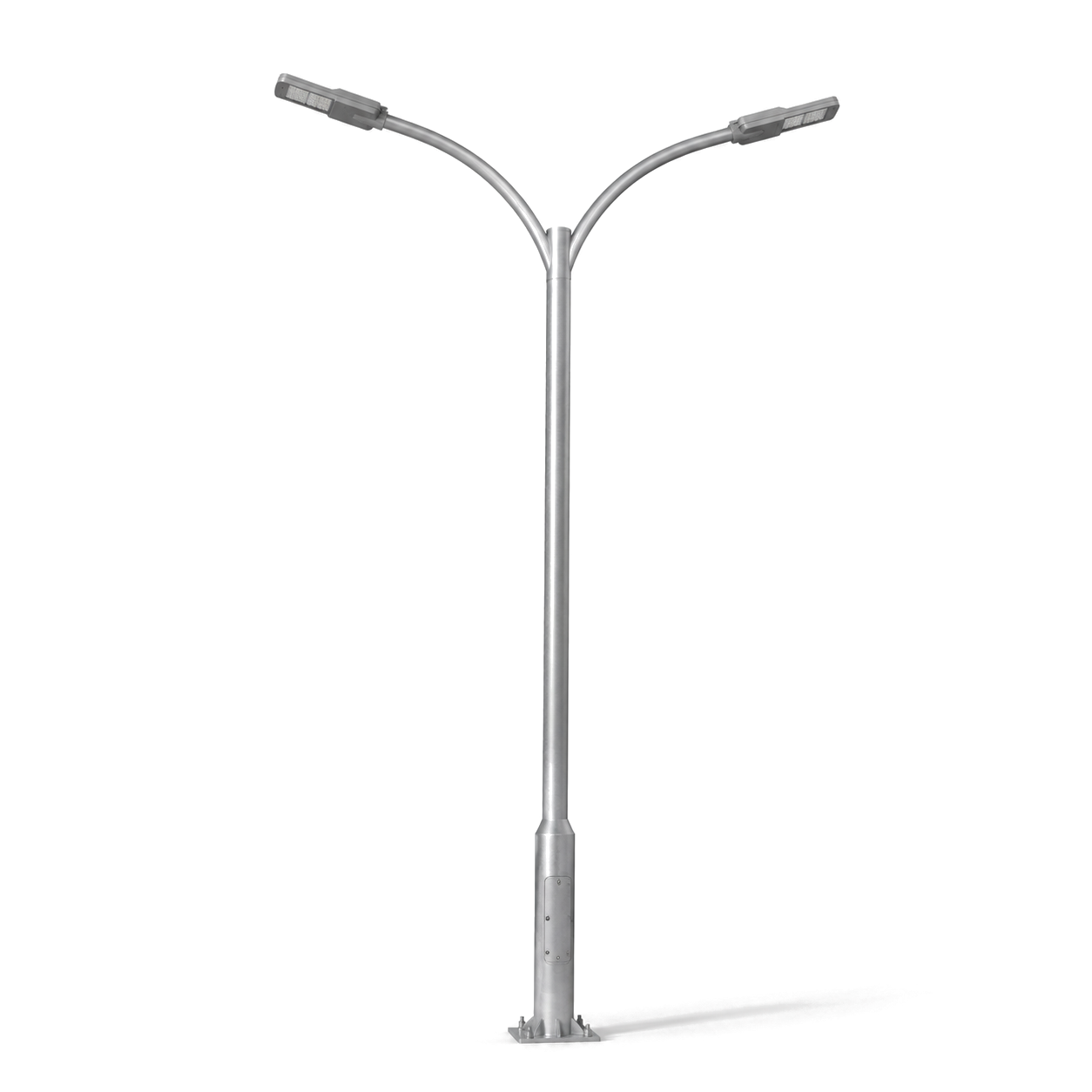
Flood lighting RFQ guide
Flood Light Pole Design: What to Confirm Before RFQ
Start a flood-light-pole RFQ with the lighting application and the mounted equipment—not the shaft height alone. Confirm the layout, luminaire schedule, mounting geometry, site conditions, access route and foundation interface so the quotation can identify open review items instead of hiding assumptions.
This is a buyer and engineering-input guide. It does not establish photometric performance, structural capacity, a foundation design or a site-safety procedure.
The short answer: begin with the complete lighting assembly
A flood-light pole is part of an assembly: pole, brackets or crossarms, luminaires, electrical/control components, base interface and the site where the equipment will be installed and maintained. A useful RFQ describes the intended assembly and labels unknowns clearly.
FHWA roadway-lighting material and the inspection reference manual both frame lighting structures as site-specific assemblies with mounted equipment and maintenance considerations. That is why application layout, equipment data and access belong in the same discussion as the pole.
Application and layout
Site type, lighting area, pole locations, mounting direction, nearby obstructions, aiming constraints and the latest available drawing.
Mounted equipment
Luminaire model or direction, quantity, brackets, attachments, weights, projected-area/EPA information where available and cable/control interfaces.
Project interfaces
Foundation/base status, finished grade, handhole orientation, electrical routing, access for installation and service, and the responsible review parties.
What belongs in a flood light pole design RFQ
An early enquiry can contain open items. The important step is to name them, assign the next review step and avoid presenting a preliminary assumption as a final configuration.
| Application and lighting layout | Sports field, yard, parking area, industrial perimeter, roadway-adjacent area or another application; include drawings, pole locations, target areas, obstacles and relevant client/authority requirements. |
|---|---|
| Pole and mounting direction | Proposed mounting height, shaft preference if any, arm/crossarm or top-mount direction, luminaire orientation, access door direction and finished-grade/base information. |
| Luminaire schedule | Datasheets or stated direction, quantity per pole, weights, projected-area/EPA data where the supplier provides it, mounting arrangement, aiming responsibility and controls/cable information. |
| Site and environmental input | Location, exposure, wind/design data supplied by the project, corrosion/finish preference, temperature or dust concerns and any restrictions on crane or lift access. |
| Foundation interface | New or existing foundation, civil drawings, base plate/anchor information when known, cable entry and the party responsible for the foundation design and installation. |
| Access and maintenance | Installation route, working area, intended maintenance access, electrical isolation responsibility, traffic or operating constraints and service ownership. |
| Quotation and review scope | Budget pricing, formal quotation, drawing coordination, submittal requirements, engineering responsibility, approval parties and production-release conditions. |
Why luminaire data changes the pole conversation
The luminaire schedule affects more than lighting output. Its mounting geometry, supplied weight and projected-area information can affect the assembly being reviewed. If the equipment is undecided, state the expected arrangement and list the luminaire selection as an open decision.
Do not use a photograph, an approximate wattage or a prior project name as a substitute for the actual mounting direction. Send the datasheet or a clear equipment schedule when available, and identify any future allowance separately.
Separate lighting intent from final engineering review
A lighting layout may communicate where light is needed, while the final project review must also address the actual equipment, structural/civil interfaces, electrical routing, access and applicable requirements. Keeping these scopes visible makes the first quotation more useful.
Lighting intent
Application, area to be lit, preliminary mounting locations, fixture direction and any available photometric or luminaire documentation.
Pole assembly
Pole, brackets, attachments, mounting geometry, base interface, handhole/access direction, finish and stated supply boundaries.
Project review
Responsible structural, electrical, civil, access, safety and authority parties; required drawings, records and release conditions.
A practical RFQ sequence
Use stages to obtain useful early pricing without assuming that a concept arrangement is approved for supply or installation.
| 1. Concept or budget stage | Share application, approximate layout, proposed height, known luminaire direction and site context. Identify unknown equipment data and needed review parties. |
|---|---|
| 2. Drawing coordination | Align the pole, brackets, luminaires, base/foundation interface, cable/control route, handhole direction, access route and supply boundary. |
| 3. Project review | Confirm the designated structural, electrical, civil, maintenance and authority review responsibilities and the expected documentation path. |
| 4. Production release | Release only the approved configuration, equipment schedule, interfaces, finish, drawings and agreed inspection/submittal requirements for the contracted scope. |
Common RFQ gaps to avoid
Most avoidable rework starts when equipment, foundation or access details are treated as implied. A concise list of unresolved points is better than a confident but unsupported assumption.
Only height is supplied
Add the application layout, luminaire schedule, mounting arrangement, base direction and site conditions.
Fixtures are unnamed
Provide the datasheet or label the fixture selection as open; do not treat an image as confirmed load or mounting data.
Existing foundations are assumed reusable
Send civil drawings, measured bolt/base information, cable entry details and the project approval path for reuse.
Maintenance is outside the scope
State the intended access method, working area, electrical isolation responsibility and operational constraints early.
Related guides for the project package
The same procurement package normally needs the load, foundation, height and RFQ information connected to the flood-light-pole layout.
Source references
These public FHWA and U.S. Department of Energy references provide context for roadway/high-mast lighting and lighting technology. They do not replace contract documents or project-specific structural, electrical, civil, access and safety requirements.
FAQ
What does flood light pole design include?
For an RFQ, it includes the intended application and layout, mounting height and geometry, luminaire and bracket schedule, known load or projected-area data, site conditions, access plan, base or foundation interface and the project review scope. It is not a universal pole size or one fixed assembly.
What luminaire information should be sent with a flood light pole RFQ?
Send the selected luminaire datasheet when available, quantity per pole, mounting arrangement, weights, projected-area or EPA information where supplied, aiming direction and any controls or cable requirements. If the luminaire is not selected, identify that as an open item rather than assuming a fixture load.
Can a flood light pole be quoted from mounting height alone?
A budget discussion can start with height, but a useful configuration also needs the application layout, fixture schedule, mounting arrangement, site/wind information, base interface and access constraints. Height alone does not define the supported equipment or project review path.
Who confirms the final flood light pole configuration?
The responsible project parties confirm the final configuration through the applicable drawings, equipment data, structural, electrical, civil, access and authority review process. A buyer guide or preliminary quotation does not replace that process.
Send a Flood Light Pole RFQ
Send the application/layout drawing, target mounting direction, luminaire and bracket schedule, known load or projected-area information, site and access constraints, foundation/base status, electrical/control notes and required review stage. Mark unknowns clearly.
What is flood light pole design?
Flood light pole design is the project-specific coordination of the lighting application, mounting geometry, luminaire schedule, known load information, site conditions, access and installation interface. It is not a universal pole height or a fixed equipment package.
For application context, review sports lighting pole options and wind-load and EPA discussion inputs before an RFQ.
Leave a Reply