Sports lighting · buyer and engineering guide
Baseball Field Light Poles: RFQ Inputs for New Fields and Retrofits
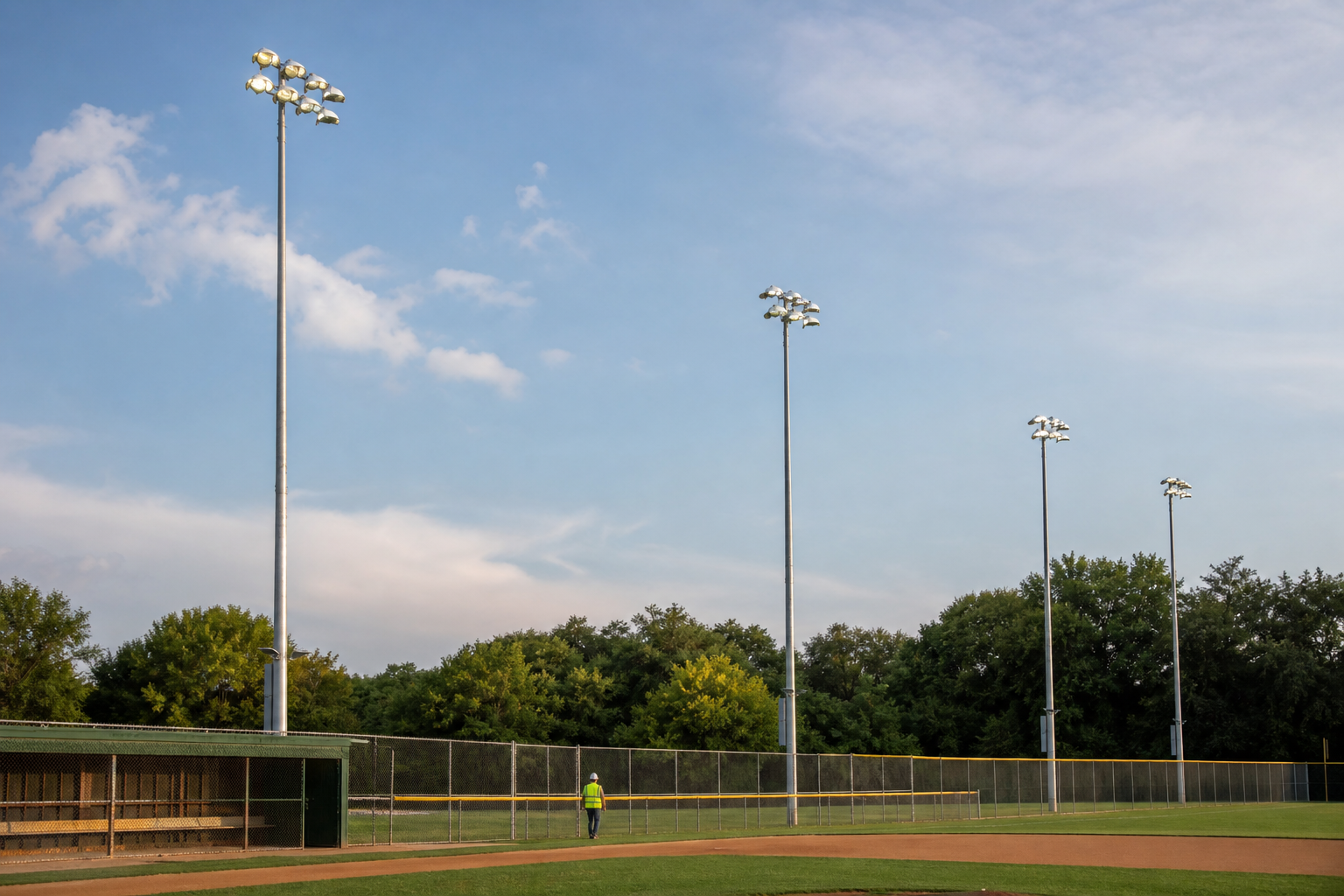
A baseball field pole package should be quoted from the current field layout, mounting and luminaire information, project design basis, access plan and scope boundary. A generic sports-pole image, a remembered height or a prior field’s fixture count is not a controlled release input.

Short answer: quote the field system, not a generic pole
For a new baseball field or a retrofit, start with the issued field layout and the project team’s equipment status. The pole supplier can discuss and quote a proposed supplied configuration against those inputs. The responsible project parties still confirm lighting performance, structural design, electrical work, foundations, installation, site safety and authority approvals. That boundary is important because a field lighting system contains several interfaces: pole shaft, base, luminaires, mounting arrangement, controls, cable route, access, civil work and the finished site.
A useful RFQ does not try to resolve every discipline in one sentence. It makes clear what is issued, what is selected, what is owner-furnished and what remains open. That lets suppliers price the same basis and gives the buyer a readable path from quotation to shop drawing review.
What “baseball field light poles” actually includes
The phrase can describe very different packages. One project may need perimeter poles for a community field with selected LED floodlights. Another may be replacing equipment while retaining some existing civil or electrical infrastructure. A third may be expanding a multi-field complex with different outfield dimensions, maintenance access rules and pole-use zones. In each case, the shaft is only one part of a coordinated system.
Start by identifying the field or zone served by each location, the current drawing revision, the intended pole type, the selected or pending luminaires, mounting concept and access approach. For a broader selection view, see the site’s sports lighting pole options. Do not turn that product overview into a project design: the governing documents remain the issued project information and responsible-party review.
The inputs that make a sports-lighting RFQ comparable
Use the table below to package information before asking for a firm proposal. An item can be unknown, but it should be labelled unknown rather than silently replaced with a catalogue assumption. This is especially useful when a contractor, lighting provider, civil team and pole supplier are appointed at different times.
| RFQ input | Why it changes the pole package | Confirming party | Quotation treatment |
|---|---|---|---|
| Field layout, pole locations and quantities | Connects each pole to the field geometry, sideline/outfield constraints and pole family | Owner / designer | Price by identified location group; flag missing locations |
| Luminaire schedule, mounting concept and aiming status | Defines whether the pole top, crossarm, fixture interface and load data are confirmed | Lighting / electrical team | Separate selected equipment from open items |
| Height, access and maintenance concept | Affects shaft configuration, lowering/access provisions and installation planning | Owner / contractor | State the requested supply and any conditional interfaces |
| Environmental and structural design basis | Controls the project-specific design review; it is not set by a generic sports-pole catalogue | Responsible engineer | Reference issued requirements; do not invent a universal value |
| Base, cable, controls and scope boundary | Prevents a pole quote from silently absorbing civil or electrical work | Buyer / project team | List inclusions, exclusions and hold points |
Scenario 1: a new municipal baseball field with selected fixtures
Scenario 1: the owner has an issued layout, defined pole locations, a pole schedule and selected luminaires with a documented mounting concept. Procurement can send those inputs with quantities, intended field zones, known control/cable notes, finish direction and the required drawing-review route. The supplier can then quote a proposed pole and mounting package against that information. The quote should say what it includes and identify anything outside the supplier’s supply boundary, such as field electrical distribution, foundations, installation and final approval.
The benefit is not merely technical. Competing quotes become easier to compare because each bidder is responding to the same field layout and equipment status. If the buyer later changes fixtures or adds a field zone, the project team can issue a revision rather than asking a supplier to reconcile an undocumented change with an older price.
Scenario 2: a retrofit with open equipment and existing site conditions
Scenario 2: a facility wants to replace aging sports lights but has not finalized the fixtures, retained poles, base condition or access strategy. The honest RFQ identifies those as open items. It may include survey photographs and known records, but it should not represent them as final structural or electrical facts. The project team can request a conditional review of a proposed pole package, list required field verification and agree a drawing or engineering hold point before fabrication.
This approach avoids a common retrofit problem: one quote assumes existing poles and bases are reusable while another includes new pole-side hardware or different mounting provisions. A low price is not comparable if the assumed interface is different. Use change control when measured site information or selected equipment changes; do not make an unrecorded site observation carry the weight of an approved project document.
Height, mounting and fixture loading are connected decisions
Pole height, crossarm or top arrangement, fixture quantity and orientation are not independent styling choices. The project’s lighting design and selected equipment govern the intended arrangement, while the project-specific design basis governs the review of the proposed structure. The supplier should not choose a final shaft or mounting interface merely because two floodlights look similar in a photo.
For that reason, include data for the selected equipment whenever it is available. If it is not selected, state that clearly and use a controlled placeholder or a documented hold point. The same discipline applies to access: a maintenance plan, lowering arrangement or site equipment constraint should be visible before the pole configuration is released. Related inputs such as pole-height selection, wind and projected-area RFQ data and the luminaire mounting interface should be reviewed as one package.
Separate pole supply from civil, electrical and installation scope
A clear sports-lighting RFQ states whether the request includes a pole shaft, base flange or direct-burial arrangement, mounting component, pole-side hardware, access provision, finish and packing. It separately identifies the known foundation, reinforcement, excavation, cable, controls, distribution, luminaire supply, aiming, installation and authority scopes. A supplier can offer a defined supplied configuration; it should not silently take responsibility for civil or electrical design that belongs to the project’s responsible parties.
This also changes how quotations are compared. Ask every bidder to cite the drawing revision, location/quantity basis, selected versus pending equipment, supplied accessories, exclusions and validity of any assumptions. When an interface is open, require it to appear in a clarification list or drawing register. That is more valuable than a generic note saying “standard installation included.”
How to compare proposals without hiding the real differences
First compare like-for-like pole families and quantities. Then compare the mounting arrangement, equipment status, access provisions, finish, hardware, documentation and exclusion list. A proposal that is lower because it omits an adapter, omits a required review step or assumes owner-furnished equipment is not necessarily wrong, but it is not the same scope. Put the differences in a comparison sheet before award.
The DOE’s solid-state lighting information and the IES standards program are useful reference points for the lighting side of a project; they do not substitute for the current project requirements or approval route. A manufacturer quote should name the reference documents it received rather than imply that a general industry page fixed the field’s final design.
Release sequence for a controlled pole package
The release path is a project-control tool, not unnecessary paperwork. It gives each party a chance to compare the field layout, pole schedule, equipment data, mounting arrangement, base/cable notes and supply boundary before metalwork and project commitments become harder to change.
| Stage | Information that should be checked | Commercial or project action |
|---|---|---|
| Before quotation | Layout, quantities, pole-use zones, selected versus pending fixtures, access expectation and scope matrix | Return clarifications rather than pricing guessed interfaces |
| Before drawing release | Current pole schedule, mounting arrangement, project design criteria, base/cable notes, finish and approval route | Release only the configuration tied to the current revision |
| Before shipment or installation | Issued drawing, supplied hardware, site readiness, electrical/civil responsibilities and acceptance process | Record changes and verify the package against the approved project documents |
What to send for a baseball field light-pole RFQ
Send the latest field layout and pole schedule; quantity and pole-use zones; selected luminaires or clearly marked pending status; intended mounting and orientation; known access/maintenance method; issued environmental or structural requirements; base, cable, controls and finished-grade notes; material and finish direction; requested supply boundary; delivery destination; and the drawing-review stage. If you are unsure which documents belong together, start with the site’s general light-pole RFQ checklist and attach the sports-field-specific information above.
Frequently asked questions
Can a supplier choose the pole height from a baseball-field photograph?
No. A photo does not establish the field layout, mounting elevations, aiming concept, fixture loading, wind design, access method, electrical interfaces or authority requirements. Use the current project package.
Should a baseball field RFQ include the luminaires?
It should state whether luminaires are selected, owner-furnished, supplied with the pole, or still open. Attach the current equipment data when it is available and keep unresolved interfaces visible.
What is different in a retrofit RFQ?
Include the existing pole, base, electrical and access condition; identify what can be verified in the field; and separate retained items from items requiring project-party review or replacement.
Prepare a comparable baseball-field pole RFQ
Send the current field layout, quantities, equipment status, mounting/access notes, known base and cable interfaces, scope boundary and required review route. Fortune Light Pole can discuss a proposed supplied configuration against those project inputs.
Open RFQ Form
Leave a Reply