Light pole shaft selection
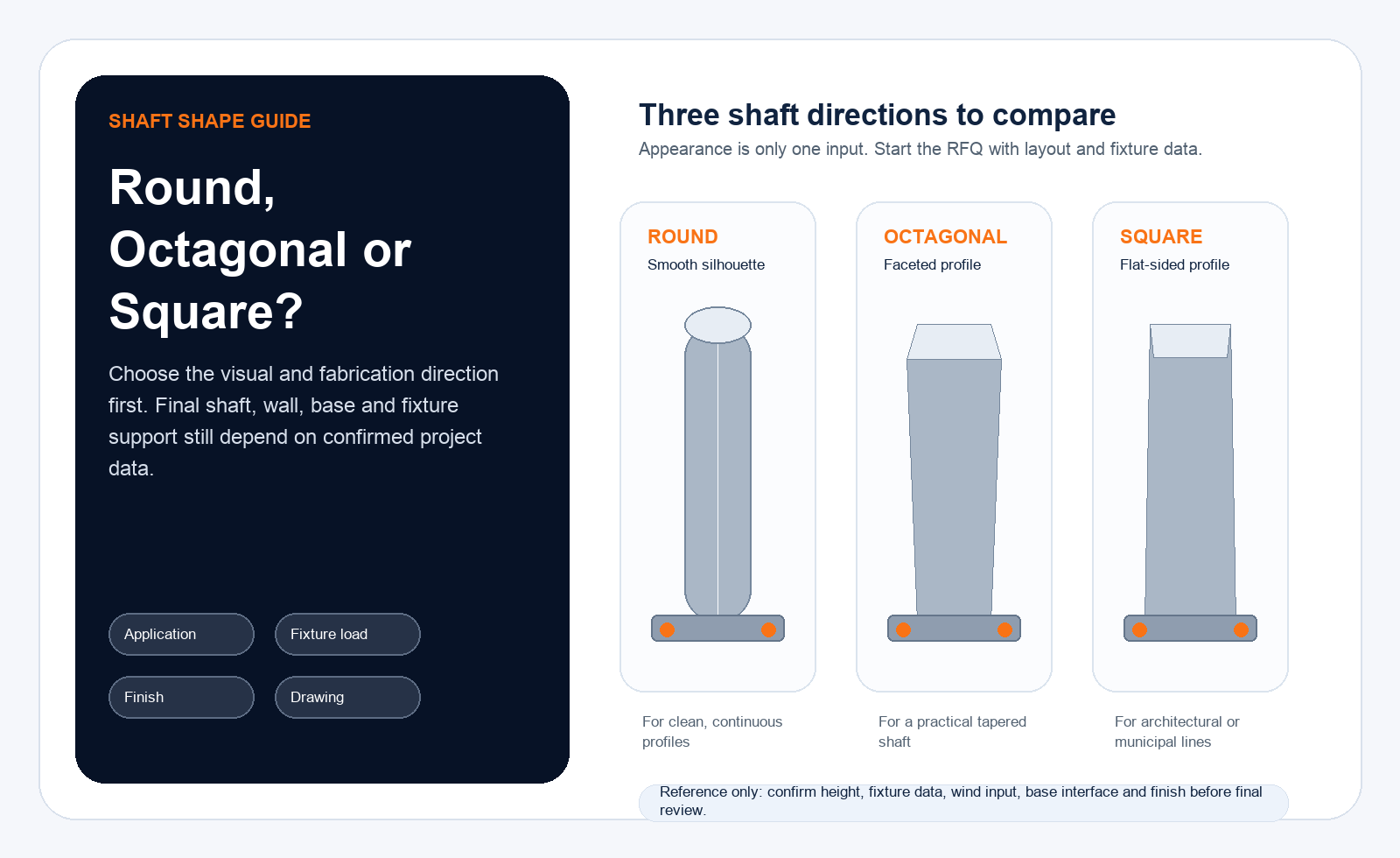
Round, Octagonal and Square Light Poles: How to Choose a Shaft Shape
Round, octagonal and square shafts can all be suitable for a light pole project. The useful choice comes from the layout, fixture data, finish direction, fabrication details and drawing requirement, not from a product photo alone.
This guide helps B2B buyers frame an RFQ before a final structural configuration review.

Start with the project, not the shaft label
A shaft shape does not replace the usual engineering inputs. Before narrowing the profile, identify the application, mounting height, fixture model, fixture weight, EPA or projected area, arm or bracket arrangement, installation method and finish expectation.
For a roadway pole, the visual line of the shaft may matter, but the road layout and fixture configuration still control the information needed for project review. For landscape projects, the finish, base detail and architectural fit can carry more weight in the early discussion.
Roadway and access roads
Start with pole position, road width, fixture orientation, arm reach and mounting height.
Garden and pedestrian areas
Start with appearance, pedestrian scale, finish direction, base detail and surrounding architecture.
Sports and area lighting
Start with fixture quantity, aiming arrangement, maintenance method and project-specific load inputs.
Round shafts: a smooth visual direction
Round tapered shafts are often considered when a continuous silhouette is preferred. They can suit roadway edges, parks, landscape work and general outdoor lighting where the client wants a simple profile without visible flat faces.
In an RFQ, the word round is only a starting point. Confirm whether the shaft is tapered, where any arm or tenon connects, the finish direction, handhole location, base interface and fixture mounting arrangement.
| Useful starting discussion | Smooth appearance, tapered silhouette, roadway or landscape visual direction. |
|---|---|
| Send with RFQ | Target height, shaft taper preference, fixture mounting detail, finish and base requirement. |
| Do not assume | One round profile, wall or base arrangement works for every fixture and wind condition. |
Octagonal shafts: a practical faceted profile
Octagonal shafts give a faceted visual profile while staying close to a conventional tapered light pole direction. They are frequently discussed for municipal roads, parking areas, access routes and projects where a clean engineered appearance is preferred.
The product name should not decide the project by itself. Buyers should still provide height, fixture data, arm configuration, wind input, surface treatment and drawing requirement so the shaft and support details can be reviewed together.
| Useful starting discussion | Tapered faceted profile, municipal or commercial roadway appearance, practical finish direction. |
|---|---|
| Send with RFQ | Pole height, octagonal profile preference, luminaire weight and EPA, arm or bracket detail, finish and installation country. |
| Do not assume | An octagonal visual profile determines the final wall, flange, access door or anchor arrangement. |
Square shafts: a flat-sided architectural direction
Square shafts are useful when the project wants visible flat faces, a more architectural line or a profile that relates to modern site furniture, signage or municipal streetscape elements. They can also be part of solar or integrated equipment configurations when the project layout calls for it.
A square shaft needs the same project discipline as any other pole. Confirm the device schedule, arm or luminaire position, door and cable direction, finish, base and any requirements for equipment mounting before treating it as a final selection.
| Useful starting discussion | Flat-sided appearance, architectural layout, integrated equipment or modern site-furniture direction. |
|---|---|
| Send with RFQ | Target height, section preference, luminaire or device schedule, mounting faces, finish and drawing need. |
| Do not assume | A square shaft automatically accommodates solar, CCTV, signage or other equipment without configuration review. |
A practical shaft-shape comparison for buyers
Use this table to decide what should be discussed first. It is a configuration guide, not a substitute for project-specific design review.
| Round | Smooth profile; discuss taper, arm connection, finish and base interface. |
|---|---|
| Octagonal | Faceted tapered profile; discuss roadway layout, fixture data, arm geometry and finish. |
| Square | Flat-sided profile; discuss architectural fit, mounting faces, equipment schedule and access details. |
| All shapes | Confirm height, fixture weight, EPA or projected area, wind input, material, finish, installation method and drawings. |
What to send before quotation
The best RFQ does not need every detail finalized. It should distinguish confirmed data from open items so the quotation can state the assumptions clearly.
Site and application
Roadway, garden, sports, solar or integrated equipment application; installation country and site context.
Pole geometry
Target height, preferred round/octagonal/square direction, arm or bracket layout and base method.
Fixture and equipment
Luminaire model, weight, EPA or projected area, quantity per pole and any additional devices.
Finish and material
Stainless steel or aluminum alloy direction, finish route, color and visual reference if available.
Wind and drawings
Known design criteria, local requirements, existing drawings and whether a quotation or drawing review is needed.
Packing and delivery
Quantity, packing preference, container or handling constraints and project schedule context.
How Fortune Light Pole reviews shaft selection
Fortune Light Pole treats the shaft profile as one part of the configuration. The first review normally connects the project application, mounting height, fixture and device data, arm arrangement, site condition, material and finish direction.
For public product pages, a shape is shown as a useful starting point. Final dimensions, interfaces and details remain subject to confirmed project requirements and engineering review.
Configuration first
Use the shaft profile to frame the conversation, then connect it to the actual project load and layout.
Assumptions visible
Keep unknown fixture, wind or civil inputs visible in early RFQs instead of hiding them in a product name.
Project-ready next step
When the input set is clear, the quotation and drawing discussion can focus on the right details.
Helpful source references
These references support the wider practice of confirming roadway layout, luminaire data, structural support inputs and wind context before finalizing a lighting support configuration.
Related pages
Continue from shaft selection to roadway product families, wind and EPA preparation, materials and RFQ planning.
FAQ
Is one shaft shape stronger than the others?
There is no universal ranking. The final review depends on the complete configuration, including height, material, wall, fixture data, arm or bracket geometry, wind input and base interface.
Can I request a quote with only a shaft shape and height?
A preliminary discussion can begin, but add application, fixture or equipment data, mounting requirement and site context before treating the quote as a final configuration.
Does a square shaft automatically suit equipment mounting?
No. Cameras, signage, solar hardware and communications equipment need their own device schedule, mounting faces, cable route and access review.
Should material be chosen before shaft shape?
Both can be discussed together. State whether stainless steel, aluminum alloy or an open engineering review is preferred, then include the finish and environmental context.
Send a Shaft-Shape RFQ
Share the application, target height, round/octagonal/square preference, fixture or device data, arm layout, material, finish, site location, wind information and drawings already available.
Leave a Reply