Verified industry update · July 2026
FHWA Nighttime-Visibility Update: What Roadway-Lighting RFQs Should Capture
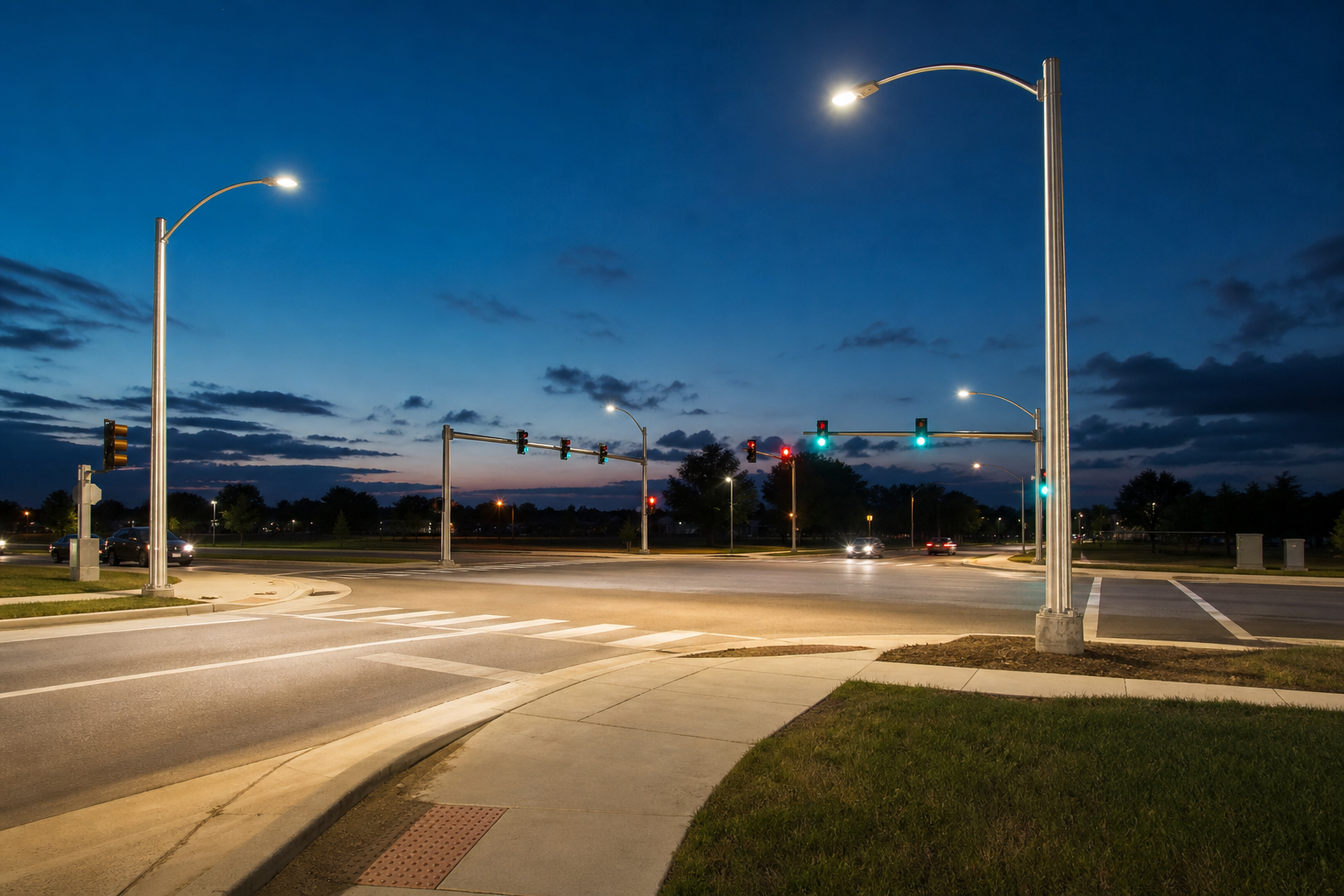
FHWA’s May 2026 update on nighttime visibility is not a pole catalogue. Its practical procurement signal is that road agencies are prioritizing risk locations and implementation methods. A useful RFQ should therefore carry the site and equipment interfaces that turn that priority into a reviewable lighting-pole package.
This article is an original buyer/engineering analysis of public sources. It does not establish a lighting design, structural capacity, foundation, electrical design, installation method or authority approval.

What is new—and what is not
FHWA's EDC-7 Nighttime Visibility for Safety page was modified on May 22, 2026. It describes a systemic safety focus across intersections, pedestrian and bicyclist activity, roadway departures and nighttime visibility, with examples of agencies using lighting alongside other countermeasures.
The update does not prescribe one pole height, shaft, luminaire, mast arm, foundation or installation method. Treat it as current public planning context. The project team still needs to define the actual application, layout, equipment and review requirements.
The buyer implication: move from a pole schedule to a location package
A generic schedule can name a pole and quantity but leave the reasons for its location invisible. For a safety-driven package, attach the current plan and identify the intersection, crossing, roadway segment or access road context. Show the pole position, intended light direction, luminaire status and constraints that affect the interface.
This makes quotation comparison more useful. Suppliers can identify what is proposed, what is supplied by others and which inputs remain open instead of converting a general safety objective into an assumed product configuration.
| Risk and layout context | Current plan, pole locations, quantities, roadway/intersection/crossing context, curb or grade reference, clearance constraints and the project stage. |
|---|---|
| Pole and luminaire interface | Proposed height direction, shaft and arm concept, selected luminaire or clearly marked open selection, mounting interface, orientation, available mass/projected-area data and supplied-by party. |
| Installation interface | Known base plate, direct-burial or other direction; cable entry/access notes, civil status, finished grade and responsibility for final confirmation. |
| Performance and review route | Applicable owner criteria, lighting-design responsibility, maintenance/access constraints, material/finish direction, documents and reviewers for the controlled release. |
Why nighttime visibility changes the RFQ conversation
FHWA's roadway-lighting guidance describes the role of lighting in nighttime seeing conditions, safety and traffic operations. That is a reason to keep site plan, clearance and equipment interfaces visible—not grounds to assume an unreviewed pole design.
The current EDC-7 update and this roadway-lighting reference both provide planning context. Neither replaces the project-specific lighting, structural, civil, electrical and approval process.
A disciplined response for suppliers and project teams
For this kind of public safety update, the best commercial response is not to claim that every roadway needs the same lighting assembly. Ask for the risk location, current layout, luminaire status, pole and bracket direction, civil interface and required review path. Then state the supplied configuration and open items plainly.
That approach supports a better RFQ, a cleaner shop-drawing review and fewer late changes to arm orientation, base details, finish or access provisions.
Primary sources
All sources below were checked as publicly accessible before publication. Their guidance provides context; project-specific requirements remain with the responsible parties.
FAQ
| What changed in the FHWA nighttime-visibility update? | FHWA's EDC-7 page, modified May 22, 2026, highlights systemic safety approaches for intersections, pedestrians and bicyclists, roadway departures and nighttime visibility. It is planning context, not a project-specific pole specification. |
|---|---|
| Does the update specify a standard pole or arm? | No. Project teams still need to define the site layout, mounting and luminaire interface, clearances, foundation or installation approach, materials, finish and applicable review requirements. |
| What should a roadway-lighting RFQ include first? | Start with the current plan, pole locations and quantities, application or risk context, luminaire and bracket status, mounting orientation, base or installation interface, cable/access notes, finish and the named review route. |
Prepare a Roadway-Lighting RFQ Package
Send the latest layout, risk/location context, quantities, pole and luminaire direction, base/cable notes, material or finish reference, access constraints and required review stage. We can use them to discuss a proposed supplied configuration.
Leave a Reply