B2B roadway-lighting replacement guide
Roadway Light Pole Replacement: Existing-Condition RFQ Inputs Before Fabrication
Short answer: a replacement-pole quotation should start with a controlled record of the existing location and the requested supply boundary, not an assumption that a former pole, photo or asset number defines every current interface. Good RFQ inputs let the buyer compare supplier responses while keeping field, civil, electrical, traffic-control and approval decisions with the responsible project parties.

Roadway-lighting replacement work often begins with limited information: an asset tag, a maintenance request, a photo taken from the shoulder, an older drawing set or a request to make a support “match existing.” Those records are useful starting points, but they do not automatically establish the current pole assembly, the supplied scope, the foundation interface, the electrical condition or the installation plan. Treating them as final inputs can produce bids that appear comparable while assigning different assumptions to the buyer, supplier and field contractor.
This is an RFQ and release-control guide for owners, consultants, contractors and purchasing teams. It does not provide structural, civil, electrical, traffic-control, installation or authority direction. The responsible project parties determine the final replacement configuration and approval route. Fortune Light Pole can quote the agreed pole-side supply scope, identify commercial clarifications and prepare submittal information against the documents provided.
Separate the replacement objective from the field condition
Start by stating what the project is trying to replace: a damaged support, an aging corridor asset, a planned rehabilitation item, a change in luminaire arrangement or a broader lighting improvement. That sentence matters because replacement work can have different scope boundaries. A supply-only replacement package is not the same as a contract that includes removal, electrical isolation, traffic control, foundation work, installation and authority acceptance.
FHWA notes that replacement of poles or fixtures in a roadway corridor can be part of a broader maintenance or rehabilitation program, while isolated damage repair can be treated differently for funding purposes. That is U.S. program context, not a universal rule for a particular project. It does show why an RFQ should state whether the buyer is requesting a programmed corridor package, a documented replacement scope or an early commercial review rather than relying on the word “replacement” alone.
Build an existing-condition record before comparing quotes
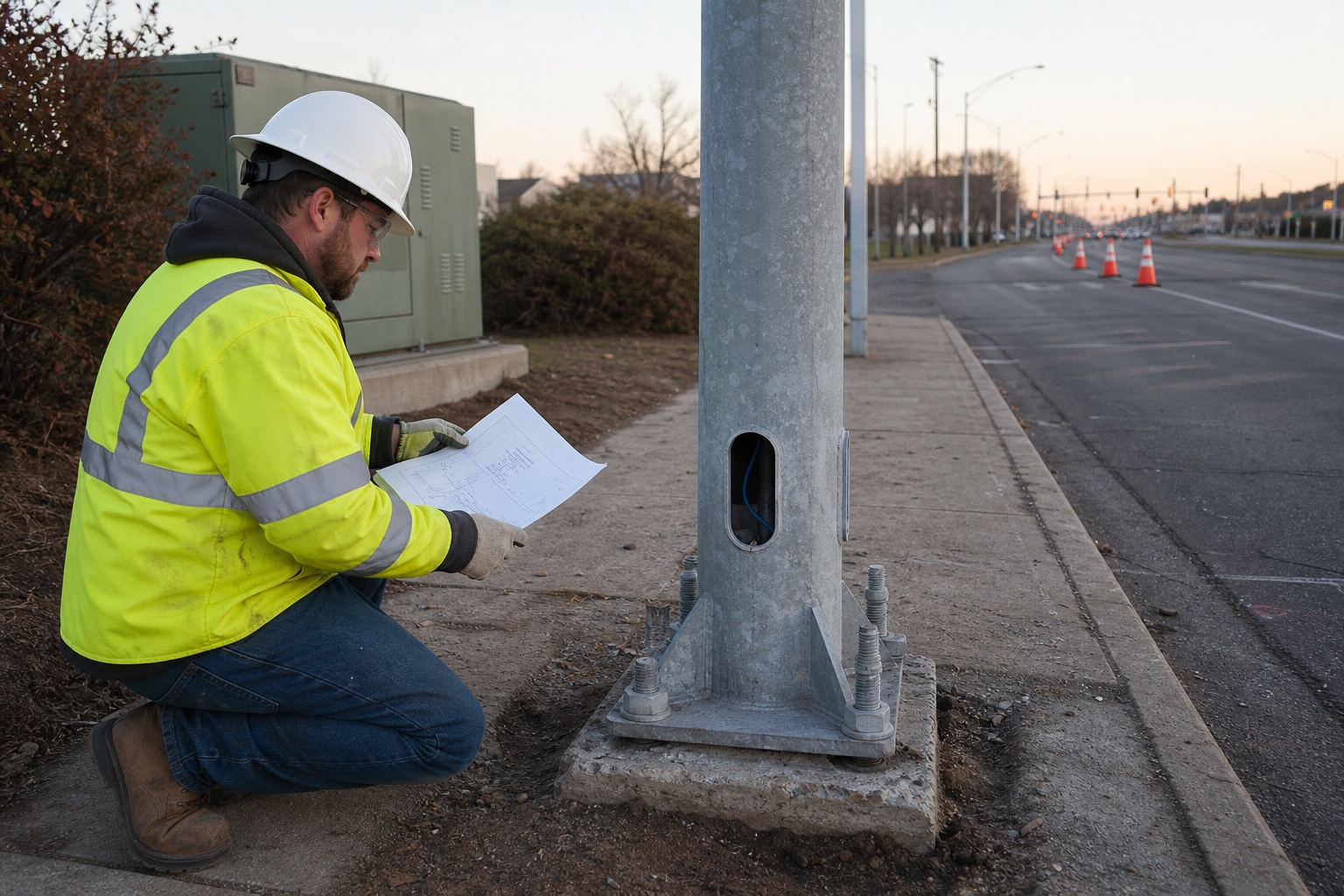
The first RFQ package does not need to resolve every technical question, but it should distinguish observed facts from open items. Record the location reference, available drawings, photos, visible shaft and mounting arrangement, luminaire or arm information where known, adjacent roadside context, access limitations and any issued project notes. Mark uncertain information as pending instead of translating it into a supplier assumption.
FHWA's Ancillary Structures Inspection Reference Manual describes inspection observations for light-pole-related structures. A buyer does not need to reproduce an engineering inspection in a commercial RFQ. The practical lesson is that a replacement decision is connected to the existing site and assembly, not just a nominal pole height or a generic product photograph.
| Existing-condition input | Why it matters to the RFQ | Responsible confirming party | Quotation treatment |
|---|---|---|---|
| Location, asset reference and quantity | Links each item to a known project area and replacement sequence. | Owner or contractor | Price by listed location; identify any missing quantities. |
| Current photos, drawings and revisions | Shows the evidence used without presenting an old record as a new approval. | Owner, consultant or document controller | Reference the received record and list unknowns. |
| Known pole, arm and luminaire information | Defines visible equipment interfaces and pending selection data. | Lighting designer or equipment owner | Quote the stated assembly; flag open equipment inputs. |
| Known base, foundation or anchorage information | Separates pole-side supply from civil and existing-condition decisions. | Civil or structural project party | State supplied hardware and explicit exclusions. |
| Electrical, access and work-zone boundaries | Prevents a material quote from silently absorbing field operations. | Electrical contractor, installer or owner | Identify scope boundaries and required coordination. |
Do not treat an old pole as a complete specification
An existing support can indicate visual intent, approximate location and the type of interface the project team needs to investigate. It cannot, by itself, confirm a current production release. The available documents may have changed, the replacement need may affect the luminaire or arm, field conditions may be different from the original installation, and the owner may have a different review route. Put the known record in the RFQ, then add a short open-items register with a named owner for each decision.
The site's roadway light pole range and engineering support information can help organize a commercial conversation. They do not replace a released schedule or responsible-party confirmation. FHWA's ancillary highway structures resources are likewise informative rather than a project approval or product certificate.
Scenario one: a documented corridor replacement
Example: a municipality is replacing a defined group of corridor supports as part of a programmed package. The RFQ contains the current schedule, quantities, location references, existing-condition photos, known luminaire and arm information, required finish direction, submittal route, delivery sequence and stated scope split. The civil, electrical, removal, traffic-control and installation packages are assigned to other parties.
In this case, a supplier can return a clear commercial proposal for the agreed pole-side assembly, list the documents used, identify supplied accessories and distinguish clarifications from exclusions. The buyer can compare responses against the same record instead of asking each bidder to infer a different foundation or field sequence.
Scenario two: an urgent asset replacement with open interfaces
Example: a corridor has a visible damaged support and the buyer needs a preliminary supply lead-time view before the full field review is complete. The buyer provides the known location, photographs, approximate assembly information and the desired commercial timing, but identifies the foundation, electrical isolation, installation method and final equipment data as pending. The RFQ asks for a preliminary proposal with an explicit clarification register, not a fabrication release.
This keeps the early response useful. The supplier can outline a proposed supplied scope and the information needed for a controlled revision. The project team retains responsibility for site safety, field assessment, replacement basis, approval and final release. A later submittal can be compared with the confirmed project record before production begins.
Coordinate inspection records with the commercial scope
For highway ancillary structures, FHWA maintains inspection resources covering light poles and related structures. Those resources belong to the applicable agency's inspection and maintenance process; they do not transfer an inspection determination to a product supplier. In an RFQ, the useful commercial question is simpler: what record has the project team issued, what condition or interface remains open, and who will confirm it before fabrication release?
Use the result to keep scope boundaries visible. A commercial quotation may include the pole shaft, agreed arm or bracket, agreed mounting components, finish, drawings, packing and delivery information. It should not silently include field diagnosis, civil design, electrical work, work-zone control, removal, installation or authority acceptance unless those duties are expressly part of the agreed supply contract.
Use a controlled release sequence
| Stage | Buyer's controlled record | Supplier response | Release condition |
|---|---|---|---|
| RFQ issue | Known location, quantity, existing evidence and requested scope. | Commercial proposal, assumptions and clarification list. | Open items are visible, not assumed closed. |
| Interface alignment | Updated project data and assigned decision owners. | Proposed pole-side configuration against issued inputs. | Supply boundary is agreed. |
| Submittal review | Current drawings, review route and document revision. | Drawings and agreed supply documentation. | Project reviewers complete their process. |
| Fabrication release | Approved release record and change-control owner. | Production timing for agreed scope. | Pending items are not treated as approval. |
| Delivery coordination | Delivery point and assigned site interfaces. | Packing and delivery information. | Field responsibilities remain assigned. |
What to send with the RFQ
Send the location or asset list, quantity, current drawing references, available photos, known pole/luminaire/arm information, finish direction, visible base or anchorage record where issued, target delivery need, required submittals, and an open-items list with the responsible confirming party. State whether the request is for a budget indication, a commercial proposal or a release-ready supply package. The clearer that distinction is, the less likely a quotation is to hide different assumptions.
Use the RFQ form to share the available project record and identify the intended scope. Fortune Light Pole can help organize a pole-side supply proposal and commercial clarification list. Structural, civil, electrical, traffic-control, installation, inspection and authority responsibilities stay with the applicable responsible project parties.
Frequently asked questions
What should an existing-condition roadway light-pole RFQ include?
Include the asset or location reference, current drawings where available, required quantity, photos and field observations, known pole and luminaire information, known foundation or anchor interface, electrical and access boundaries, required submittals, delivery need and the party responsible for unresolved items.
Can a replacement pole be quoted from an old catalogue number alone?
An old reference can help identify a starting point, but it does not confirm the current assembly, field condition, supplied scope, drawings, approval route or installation interface. The responsible project parties should confirm the issued replacement basis and any open items before fabrication is released.
Who confirms the foundation, electrical and installation scope on a replacement project?
Those boundaries remain with the owner, consultant, contractor, utility, authority or other responsible project parties identified in the project package. A pole supplier can quote the agreed pole-side scope and list clarification needs, but does not replace structural, civil, electrical, traffic-control, installation or authority review.
Next step: organize a clearer replacement-pole RFQ
Start with the issued record and visible open items
Share the location list, photos, known equipment information, available drawings, replacement objective, delivery need and project review stage. We will identify commercial clarification items and propose the agreed pole-side scope.
Primary sources
- FHWA preventive-maintenance eligibility guidance — U.S. funding context for corridor lighting and signal replacement, not a project-specific instruction.
- FHWA Ancillary Structures Inspection Reference Manual — inspection-observation context for ancillary structures.
- FHWA ancillary highway structures resources — inspection-resource context for highway ancillary structures.
Leave a Reply