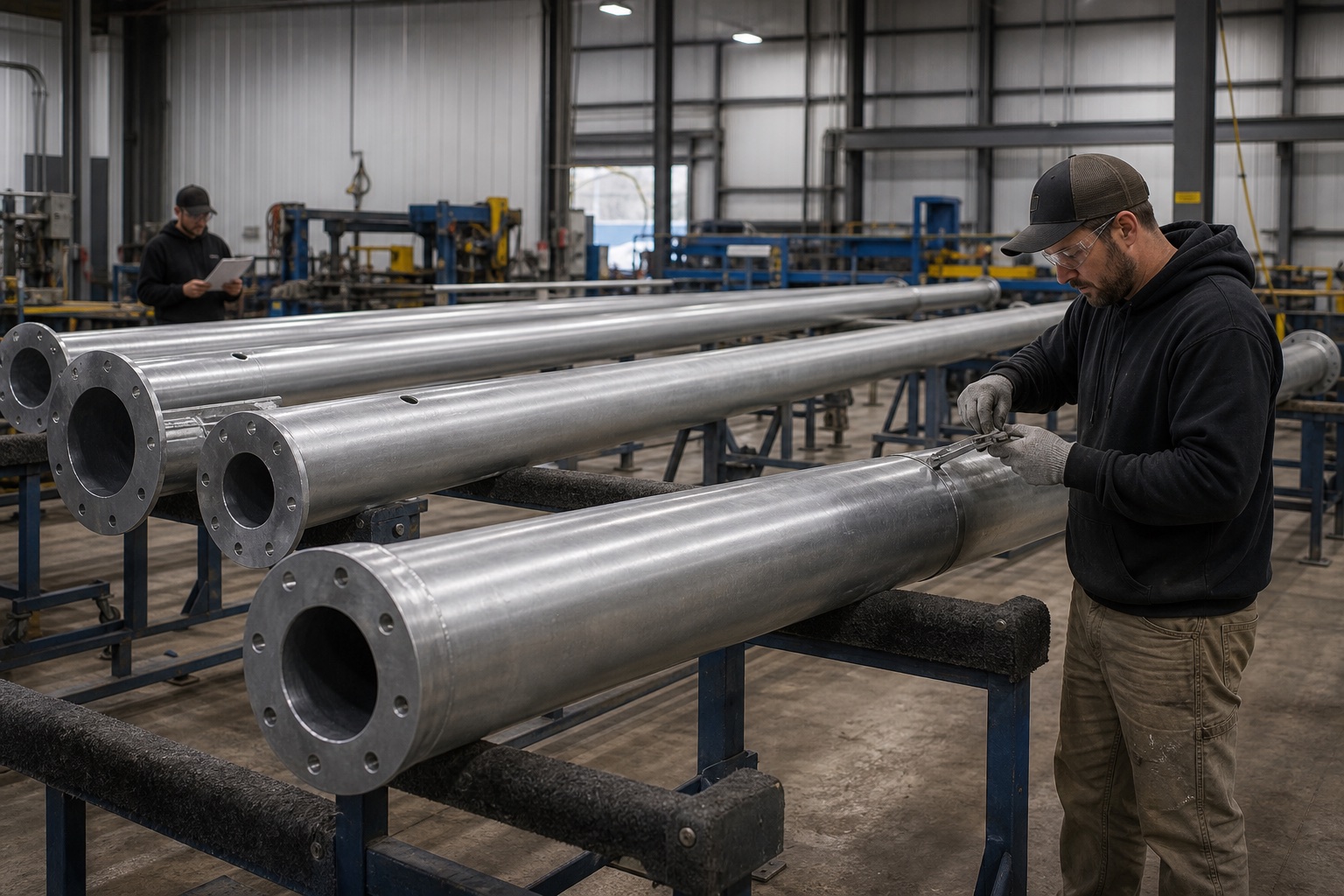
B2B aluminum roadway-lighting procurement guide
Aluminum Roadway Light Pole Factory Quote: RFQ Inputs Before Release
Short answer: a useful aluminum roadway light-pole factory quote is built from a controlled project record: the issued pole schedule and drawings, the agreed pole-side configuration, known alloy or temper references when they are specified, interface data, finish, documentation, delivery and review conditions. The quotation should make open items visible rather than turning them into unpriced assumptions.

Purchasers sometimes approach an aluminum roadway-lighting enquiry as if the factory only needs a nominal height, a quantity and a reference image. That can be enough for an early conversation, but it is rarely enough for comparable offers or a controlled production release. A roadway light pole connects product, luminaire or arm, base or anchorage arrangement, finish, documents, shipment and site work. If the RFQ leaves those interfaces unclear, two factory responses can describe apparently similar poles while relying on very different assumptions.
This guide is for buyers, contractors, consultants and project teams preparing an aluminum roadway light-pole enquiry. It is not a structural, civil, electrical, installation or authority design instruction. The responsible project parties establish the final configuration, governing documents and review route. Fortune Light Pole can quote the agreed pole-side scope, explain commercial clarifications and prepare submittals against the project record provided.
Start with the quote boundary, not the material label
“Aluminum pole” identifies a material family, not a complete supply definition. Before asking for price or lead time, say whether the request concerns a supply-only pole, an assembly with an arm or bracket, replacement parts, a preliminary budget indication, or a release-ready production package. Then identify what is inside and outside the supplier's scope: pole shaft, base plate or other agreed mounting arrangement, arm, hardware, finish, documents, packing and delivery. Civil design, foundations, electrical work, installation, traffic management and authority acceptance should not be silently absorbed into a product quote.
Where a project specifies an alloy or temper designation, preserve the exact issued reference and document revision. The Aluminum Association's standards resources explain that alloy and temper designations are controlled systems, not informal product descriptions. That source is context for terminology, not a substitute for a project specification or responsible engineering decision.
Build a shared RFQ record for every pole mark
Use a simple register to separate confirmed data from pending decisions. The register should connect every quoted item to a pole mark, drawing, quantity and version of the project record. It also stops a drawing from one revision, an arm from another and a finish note from an email chain being treated as a single approved instruction.
| RFQ input | Why it matters | Confirming party | Quotation treatment |
|---|---|---|---|
| Pole marks, quantities and current drawing revision | Connects the offer to the actual issued schedule and avoids mixed revisions. | Owner, designer or document controller | Quote by issued pole mark; list missing marks or conflicts. |
| Specified shaft, alloy/temper reference and form | Preserves the actual product input instead of a generic material label. | Responsible designer or specification owner | Reference the received requirement; flag unissued information. |
| Arm, luminaire and mounting interfaces | Defines the known pole-side attachment and equipment relationship. | Lighting designer or equipment owner | State included interfaces and unresolved equipment inputs. |
| Finish, colour, corrosion-protection or appearance direction | Separates a visible requirement from an assumed factory finish. | Architect, owner or specification owner | Quote the stated finish and sample or approval path where requested. |
| Submittal, delivery and document requirements | Controls review, packing and commercial timing. | Buyer, contractor or authority | List documents, delivery point and timing assumptions. |
Keep alloy and temper references connected to the issued documents
When a drawing or specification identifies a material designation, copy that reference exactly into the enquiry and proposal. Do not replace it with a vague phrase such as “standard aluminum.” The Aluminum Association maintains international alloy designation records, illustrating why the designation and condition record matters to a material conversation. It does not determine which alloy, temper, section or fabrication approach is suitable for a particular pole; that remains a project decision.
For a factory, the practical RFQ question is not “which aluminum is best?” in isolation. It is: what has the responsible project team issued, what performance or document requirement accompanies it, what profile or shaft form is called for, and what must be shown during submittal review? Keeping those questions in the register makes the quote auditable and helps prevent a supplier from pricing a different interpretation than the buyer expects.
Make interfaces explicit before a factory is asked to release production
An aluminum roadway pole is normally one part of a larger assembly. A luminaire, arm, bracket, access opening, base or direct-bury interface, anchor arrangement, cable entry, finish and delivery plan can all affect the supplied scope. The product supplier can respond to the issued pole-side requirement, but the RFQ should name who confirms the adjoining civil, electrical and installation interfaces. This is especially important on retrofit work, where a photograph may show appearance but not the current released interface.
For U.S. Federal-aid context, FHWA's Buy America Q&A explicitly discusses aluminum light poles permanently installed on covered projects. That is jurisdiction- and funding-specific guidance, not a worldwide purchasing rule. If it applies, the buyer should put the applicable project requirement, documentation route and responsible compliance party in the RFQ rather than asking a factory to infer them from the destination alone.
Scenario one: the issued urban corridor package
Example: a consultant issues a corridor pole schedule with pole marks, quantities, a current drawing revision, stated shaft configuration, luminaire and arm interfaces, finish direction, submittal requirements and delivery phasing. The contractor's RFQ states that foundations, electrical connections, installation and authority review sit with separately named parties. Each bidder receives the same controlled record.
In that case, a factory can return a comparable pole-side proposal. It can state what is included, identify referenced drawings, list documentation and point out genuine commercial questions. The buyer can compare offers by configuration, scope, documentation and delivery assumptions instead of trying to normalize different interpretations after award.
Scenario two: an early estimate with open equipment data
Example: a contractor needs a preliminary indication for an aluminum pole package while the luminaire selection and final arm detail remain under review. The RFQ includes quantity ranges, the latest plan extract, known shaft intent, desired delivery window and an open-items list. It asks for a preliminary commercial proposal, not a production release.
The supplier can provide a transparent response that describes the provisional configuration and the information required for revision. The buyer retains the right people to resolve the luminaire, arm, mounting, foundation and approval interfaces. This protects the schedule conversation without presenting a preliminary quote as evidence that a final technical decision has been made.
Compare factory proposals by their assumptions register
A headline unit price is only one part of a usable comparison. Review the document revision each factory used; shaft and mounting description; stated material reference; arm or bracket scope; finish; accessories; drawings and certificates; packing; delivery point; exclusions; and every clarification. Ask whether the same pole marks and quantities are included in every offer. A short assumptions register often reveals more than a longer sales description.
Use the site's roadway light poles page, engineering information and RFQ form to organise the commercial conversation. These resources do not approve a design or transfer responsibility for interfaces. They help make the project record more complete before the buyer asks a factory to commit production capacity.
Use a release sequence that keeps changes visible
| Stage | Controlled buyer record | Factory response | Release condition |
|---|---|---|---|
| RFQ issue | Schedule, drawings, quantities, known interfaces and requested scope. | Commercial quote with assumptions and clarifications. | Open items are identified, not assumed closed. |
| Configuration alignment | Current equipment and finish direction with named decision owners. | Revised pole-side scope against issued information. | Scope boundary is agreed. |
| Submittal review | Released documents and review route. | Agreed drawings and supply documentation. | Responsible reviewers complete their process. |
| Fabrication release | Approved release record and change-control contact. | Production timing for the agreed scope. | Unresolved items do not become production assumptions. |
| Delivery coordination | Delivery point, sequence and site receiver. | Packing and shipment information. | Site work remains with assigned parties. |
What to send for a stronger aluminum pole enquiry
Send the current pole schedule and drawings, quantity, intended application, known shaft and mounting information, any issued material reference, luminaire or arm data, finish direction, document needs, delivery point and requested timing. Add a clear scope boundary and an open-items list with decision owners. Label the request as budget, quotation or release-ready supply. That distinction allows a factory to give a useful answer without converting uncertainty into a hidden commitment.
Fortune Light Pole can review the commercial inputs, prepare a proposed pole-side supply scope and identify clarification points. Structural, civil, electrical, installation, inspection and authority decisions remain with the project parties responsible for them.
Frequently asked questions
What information should an aluminum roadway light pole RFQ include?
Include quantity and pole marks, current drawings, stated product configuration, known alloy or temper record where specified, mounting and luminaire interfaces, finish direction, document and certification needs, delivery point, review route and a named owner for unresolved items.
Can a factory quote be compared when the drawing package is incomplete?
It can be used as a preliminary commercial response when it clearly identifies the received documents, the proposed pole-side scope, assumptions and open decisions. It should not be treated as a fabrication release until the responsible project parties close the relevant inputs.
Who confirms structural, civil, electrical and authority requirements?
Those decisions remain with the owner, consultant, contractor, utility, authority or other responsible project parties. A pole supplier can quote the agreed supply scope and identify commercial clarification needs, but does not replace project design, installation or approval responsibilities.
Next step: prepare a comparable factory RFQ
Share the current record, not only a reference image
Send the pole schedule, drawings, quantities, known interfaces, finish direction, documentation needs, delivery requirement and review stage. We will identify commercial clarification points and propose the agreed pole-side supply scope.
Primary sources
- Aluminum Association standards resources — context for controlled alloy and temper terminology.
- Aluminum Association international alloy designation records — designation-record context, not a project material selection.
- FHWA Buy America Q&A — U.S. Federal-aid context for aluminum light poles where applicable.
Leave a Reply